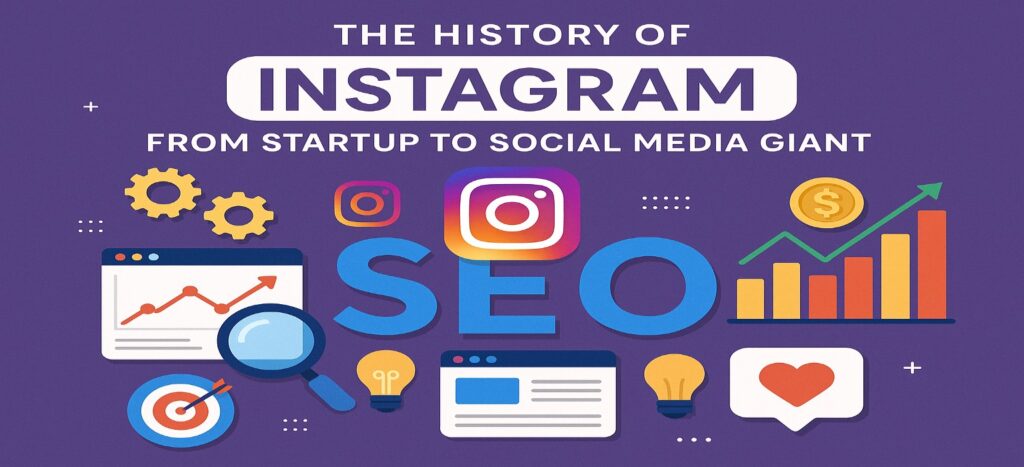
When we do not forget social media nowadays, Instagram is one of the first systems that comes to mind. With a couple of million energetic customers, it has come to be a global hub for communication, creativity, and business from a clean picture-sharing app.
But how did Instagram begin, and how did it become a state-of-the-art powerhouse?
Let’s take a deep dive into an appealing journey to Instagram – from its humble beginning in 2010 to one of the most influential social media systems in 2025.
1. Birth of Instagram (2010)
Instagram was founded by Kevin Systrom and Mike Cryger in San Francisco. Originally, it began as a project called Baraban, focused on sharing plans with check-in and friends. However, the founders noticed that people loved to share photos.
Therefore, he simplified this idea, focusing most effectively on images, filters, and social sharing. On October 6, 2010, Instagram was formally released on iOS, and within 24 hours, it had 25,000 downloads.
2. Initial success and rapid development
Instagram Speedy stood out because of its specific filter, which allowed regular photographs to appear artistic and expert. As of December 2010, two months after the launch, there were 1 million users on Instagram.
Some predominant milestones within the early years:
- 2011: Instagram introduced a hashtag (#) to organize the material.
- 2012: Instagram became available on Android, leading to an explosive increase.
- 2012: Facebook acquired Instagram for $ 1 billion, recognizing its future ability.
3. Instagram under Facebook (now Meta)
After the acquisition, Instagram began to grow rapidly:
- 2013: Video sharing was added.
- 2016: Instagram Stories launched, inspired by Snapchat, and soon became more popular than Snapchat.
- 2018: Instagram TV was introduced for long-form video.
- 2020: Instagram Reels launched to compete with TikTok, which brings quick-shape video content to the platform.
These updates converted Instagram into a multi-content material platform for snapshots, videos, tales, reels, and shopping from the picture-sharing app.
4. Instagram as a professional platform
By the end of the 2010s, Instagram was not only for personal use – it became a powerful tool for businesses, influencers, and creators.
- The brands began using Instagram for marketing and advertising.
- Influencer culture increased, where individuals could make a career by promoting products.
- Instagram shopping was started, allowing users to buy products directly through the post.
It marked the social sharing of Instagram in a mixture of social + commerce.
5. Instagram in the 2020s
The 2020s brought major changes on Instagram, especially with the rise of contestants such as TikTok. To stay ahead, Instagram focused:
- Reel and short videos to catch young audiences.
- AI-managed recommendations to keep users busy.
- Manufacturer Mudrikaran Tools, which includes advertising revenue sharing, badges, and membership.
- Integration with the vision of building a meta of meta.
By 2025, Instagram will have exceeded just one app.. It is:
- A place to make a career for the creators.
- A marketing tool for small and large businesses.
- A cultural place where trends, memes, and movements are born.
6. Major data about Instagram
- More than 1.5 billion monthly active users.
- More than 500 million people use Daily Stories.
- Reels are one of the most attractive formats, which directly compete with Ticketkok.
- Millions of manufacturers earn through Instagram Mudrikaran programs.
This number shows the change of Instagram to a global social media giant from a startup project.
7. Future of Instagram
Looking forward, Instagram is expected:
- Integrate more AI and privatization equipment.
- Extend to metals with 3D and VR experiences.
- Pay attention to the manufacturer-led marketing rather than brand-cavalry marketing.
- Strengthen social commerce, make Instagram a complete shopping destination.
In short, Instagram is likely to remain one of the most influential platforms in the coming decade.
Final Thoughts
The journey to Instagram is nothing short of inspirational. In 2010, from a small photo-sharing startup to an Arab-User platform in 2025, Instagram has re-shaped ways to trade, share, and communicate online.
Its story suggests how innovation, edition, and personal connection can turn an idea right into a worldwide event. Whether you operate Instagram for a laugh, networking, or business, one factor is obvious: Instagram is here to stay, and its effect on virtual lifestyle will continue to grow.