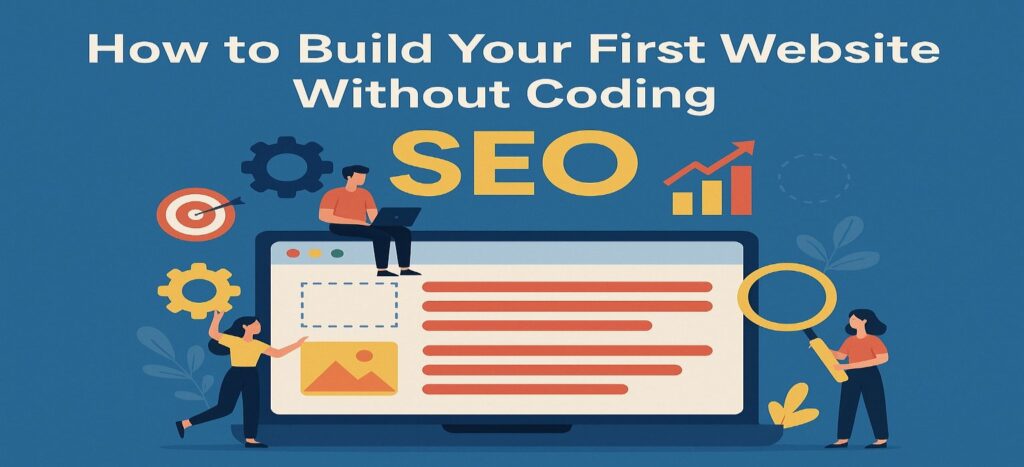
Building your first website can be overwhelming, especially when you don’t realize the way to code. The real fact is that you no longer want to research HTML, CSS, or JavaScript to create an expert, beautiful, and honestly useful website. Today, amateur-friendly tools make the whole procedure clean, fast, and even fun. In this manual, you’ll learn how to build a Website Without Coding. By the end, you’ll be ready to release a website that looks professional and works perfectly in your dreams—whether it’s a weblog, portfolio, commercial enterprise site, or online store.
1. Choose the Purpose of Your Website
Before you begin building, you need to understand why you are creating a website. Your reason will shape your design, format, and content material.
Common website kinds encompass:
- Blog – For sharing articles, tutorials, or non-public insights
- Business website – For showcasing services, info, and contact information
- Portfolio – For designers, photographers, and freelancers
- Online sales – For selling merchandise.
- Landing page – For promoting one offer or carrier
Ask yourself:
- What do I need site visitors to do on my website?
- What problem will my site solve?
- Who is my target market?
Once you’ve been given readability, you’re prepared for the following step.
2. Pick a Beginner-Friendly Website Builder
The best way to assemble a website without coding is to use a drag-and-drop website builder. This equipment can help you lay out pages through virtually clicking, dragging, and improving.
Here are the fine no-code website developers for novices:
1. WordPress (Recommended)
- Most popular website builder
- Thousands of free topics and plugins
- Perfect for blogs and commercial enterprise sites
- Requires hosting
2. Wix
- Fully drag-and-drop
- Easy for novices
- Hosting protected
3. Squarespace
- Best for creatives and portfolios
- Beautiful contemporary templates
4. Shopify
- Ideal for online shops
- Simple interface and powerful e-commerce tools
5. Blogger
- Best for simple blogging
- Completely loose
If you need a whole management system and infinite customization, WordPress is the perfect choice. If you need simplicity and pace, Wix and Squarespace are splendid options.
3. Get a Domain and Hosting (If Using WordPress)
An area name is your website’s address (instance: yoursite.com).
Hosting is where your website lives.
If you are using WordPress, you will need both. Good newbie-friendly hosting providers encompass:
- Bluehost
- Hostinger
- SiteGround
Tips for selecting a domain:
- Keep it short and easy.
- Avoid numbers and hyphens.
- Use key phrases if possible.
- Choose.Com if available
Once you buy web hosting, most companies permit 1-click on WordPress installation.
If you select Wix, Squarespace, or Shopify, hosting is automatically included.
4. Choose a Template or Theme
Every website builder gives pre-designed templates that you can customize without trouble.
When selecting a theme, search for:
- Clean and modern design
- Mobile-friendly layout
- Fast loading velocity
- Easy customization
For WordPress, famous free themes consist of:
- Astra
- OceanWP
- GeneratePress
- Neve
Pick a subject matter that fits your area of interest—for instance, an images topic for portfolios or a mag-style subject matter for blogs.
5. Customize the Layout and Design
Now the thrilling element begins!
Using your website builder’s drag-and-drop editor, you could personalize:
- Header
- Footer
- Colors
- Fonts
- Buttons
- Images
- Text sections
- Page shape
Design pointers for beginners:
- Choose simple fonts (One for headings, one for frame text)
- Stick to two to three major colours.
- Add top-notch snapshots.
- Keep spacing easy
- Avoid muddle
Remember: clean and simple designs always look more professional.
6. Create Essential Website Pages
Your website should include a few main pages that help visitors learn about you and navigate easily.
must have pages
1. Home Page
First impression of your site. It should clearly state who you are and what you offer.
2. About Page
Share your story, mission, experiences, and passion. People trust websites with an authentic “About” section.
3. Services or Blog Page
Depending on your purpose, add a page that showcases your work or your posts.
4. Contact Page
Include a contact form, email, and hyperlinks to social media.
5. Privacy Policy & Terms
Important for criminal compliance, especially when gathering information.
Many builders include a privacy policy and terms page generator.
7. Add Useful Plugins or Apps
If you’re using WordPress, plugins help extend the functionality of your site without coding.
Some essential plugins:
- Yoast SEO or Rank Math – for search optimization
- Contact Form 7 – To create a contact form
- WP Super Cache – for speed
- Elementor – for drag-and-drop modifying
On Wix or Squarespace, you may find integrated apps that serve comparable functions.
8. Optimize Your Website for SEO
A lovely website isn’t enough—you need visitors.
Use basic SEO practices to get found on Google:
- Use keywords naturally in your content.
- Add alt text to images.
- Write SEO-friendly titles and descriptions.
- Use internal linking
- Create valuable, high-quality content.
SEO may seem complicated at first, but simple steps can make a big difference.
9. Test Your Website Before Publishing
Check before clicking “Publish”:
- Does your website load fast?
- Is it mobile-friendly?
- Are all links working?
- Are your images optimized?
- Is your text easy to read?
Most developers include mobile previews—use them!
10. Publish Your Website and Keep Updating It
Once the whole thing appears superb, press the Publish button!
After launching:
- Add new content frequently.
- Update pages whilst wished
- Improve website speed
- Fix errors
- Monitor analytics
A website is not a one-time challenge—it grows with time and effort.
Final Thoughts
Building your first website without coding is easier than ever. With cutting-edge website developers, you may design expert pages, upload functions, and release your website within hours. All it takes is the proper tools, a clear cause, and constant updates.
Whether you’re starting a non-public weblog, a business website, or a digital portfolio, you currently have the whole lot you want to start—without touching a single line of code.
Very good i like it