Uncategorized

Uncategorized

How to Build Your First Website Without Coding

Building your first website can be overwhelming, especially when you don’t realize the way to code. The real fact is that you no longer want to research HTML, CSS, or JavaScript to create an expert, beautiful, and honestly useful website. Today, amateur-friendly tools make the whole procedure clean, fast, and even fun. In this manual, you’ll learn how to build a Website Without Coding. By the end, you’ll be ready to release a website that looks professional and works perfectly in your dreams—whether it’s a weblog, portfolio, commercial enterprise site, or online store. 1. Choose the Purpose of Your Website Before you begin building, you need to understand why you are creating a website. Your reason will shape your design, format, and content material. Common website kinds encompass: Ask yourself: Once you’ve been given readability, you’re prepared for the following step. 2. Pick a Beginner-Friendly Website Builder The best way to assemble a website without coding is to use a drag-and-drop website builder. This equipment can help you lay out pages through virtually clicking, dragging, and improving. Here are the fine no-code website developers for novices: 1. WordPress (Recommended) 2. Wix 3. Squarespace 4. Shopify 5. Blogger If you need a whole management system and infinite customization, WordPress is the perfect choice. If you need simplicity and pace, Wix and Squarespace are splendid options. 3. Get a Domain and Hosting (If Using WordPress) An area name is your website’s address (instance: yoursite.com). Hosting is where your website lives. If you are using WordPress, you will need both. Good newbie-friendly hosting providers encompass: Tips for selecting a domain: Once you buy web hosting, most companies permit 1-click on WordPress installation. If you select Wix, Squarespace, or Shopify, hosting is automatically included. 4. Choose a Template or Theme Every website builder gives pre-designed templates that you can customize without trouble. When selecting a theme, search for: For WordPress, famous free themes consist of: Pick a subject matter that fits your area of interest—for instance, an images topic for portfolios or a mag-style subject matter for blogs. 5. Customize the Layout and Design Now the thrilling element begins! Using your website builder’s drag-and-drop editor, you could personalize: Design pointers for beginners: Remember: clean and simple designs always look more professional. 6. Create Essential Website Pages Your website should include a few main pages that help visitors learn about you and navigate easily. must have pages 1. Home Page First impression of your site. It should clearly state who you are and what you offer. 2. About Page Share your story, mission, experiences, and passion. People trust websites with an authentic “About” section. 3. Services or Blog Page Depending on your purpose, add a page that showcases your work or your posts. 4. Contact Page Include a contact form, email, and hyperlinks to social media. 5. Privacy Policy & Terms Important for criminal compliance, especially when gathering information. Many builders include a privacy policy and terms page generator. 7. Add Useful Plugins or Apps If you’re using WordPress, plugins help extend the functionality of your site without coding. Some essential plugins: On Wix or Squarespace, you may find integrated apps that serve comparable functions. 8. Optimize Your Website for SEO A lovely website isn’t enough—you need visitors. Use basic SEO practices to get found on Google: SEO may seem complicated at first, but simple steps can make a big difference. 9. Test Your Website Before Publishing Check before clicking “Publish”: Most developers include mobile previews—use them! 10. Publish Your Website and Keep Updating It Once the whole thing appears superb, press the Publish button! After launching: A website is not a one-time challenge—it grows with time and effort. Final Thoughts Building your first website without coding is easier than ever. With cutting-edge website developers, you may design expert pages, upload functions, and release your website within hours. All it takes is the proper tools, a clear cause, and constant updates. Whether you’re starting a non-public weblog, a business website, or a digital portfolio, you currently have the whole lot you want to start—without touching a single line of code. Read More: Best Free Keyword Research Tools for Bloggers
Uncategorized

10 White Hat Link Building Strategies That Actually Work

Introduction Link building is important when it comes to enhancing the SEO of your website. However, not all link-building techniques are equal. Some are fast and risky (black hat), and others are long-term, safe, and valued by Google — these are referred to as white hat link building tactics. White hat link constructing focuses on incomes links certainly by way of developing fee, building relationships, and following Google’s guidelines. In this text, we’ll explore 10 White Hat Link Building techniques that truly work and can help your website benefit from authority and higher ratings in 2025 and past. 1. Create High-Quality, Shareable Content Content is the inspiration of any successful hyperlink-constructing approach. When you produce amazing, precise, and properly researched content, others are more likely to hyperlink back to it organically. Some types of content that people naturally like to link to are: If your content helps people actually solve real problems, they will cite it as an authoritative source. 2. Guest Posting on Established Sites Guest posting is one of the first-class and honest strategies to get inbound links. By developing content material for legit websites in your niche, you could position a hyperlink to your website in the writer bio or within the article (if appropriate). Guest posting tips: This approach allows you to have interaction with new audiences and build your reputation as an expert. 3. Broken Link Building Broken link building is a clever, value-based tactic. Here’s the process: This process works for both of you — the website owner replaces their broken link, and you receive a quality backlink. 4. Skyscraper Technique The Skyscraper Technique by Brian Dean is all about upgrading existing content that already ranks well. Proceed as follows: This strategy works because you’re offering superior value — something both readers and linkers appreciate. 5. Build Relationships in Your Niche Link building isn’t just about links — it’s about relationships. Engage with bloggers, influencers, and website proprietors for your enterprise. You can connect through: When people are familiar with and consider your brand, they’re more likely to naturally hyperlink to your content. 6. Leverage Resource Pages Some websites have “resource” or “useful links” pages that compile useful tools, guides, or articles. Discover such pages within your niche and offer your content as a useful resource. Sample search queries on Google: If your content is a good fit, the site owner would possibly gladly include your link. 7. Use Social Media for Exposure Although social media hyperlinks are usually no-follow, they could still generate visibility and, in the long run, bring about one-way links. Promote your weblog articles, infographics, or guides on numerous websites, consisting of Twitter (X), LinkedIn, and Pinterest. The more humans view and interact with your content, the better the chance someone will link to it from a website or weblog. 8. Host Expert Roundups Invite influencers or experts in your field to provide concise information in a roundup post. Such as “10 Link Building Tips from SEO Experts.” After publication, most contributors will share your post or associated links on their websites, receiving many backlinks from authoritative sites. 9. Share original research or data Sites appreciate linking to original data or research-based content. If you can report on surveys, analyze trends, or publish original insights, your content is very linkable. For example, “2025 SEO Trends based on 500+ Websites” can get backlinks from journalists, bloggers, and marketers who want to cite legitimate information. 10. Develop visual assets (infographics and charts) Visuals are shareable and get backlinks faster than simple text. Infographics, charts, and visual reports are best for imparting data in an attractive way. When other people use your infographic, they’ll likely credit your site with a backlink – a simple but powerful strategy for organic link building. Why White Hat Link Building is the Smart Choice? White hat strategies may take longer to expose consequences, but they ensure long-term stability and shield your website from Google consequences. These techniques assist you: Remember, fine over quantity. A handful of genuine, high-authority inbound links can be worth more than 100 spammy backlinks. Conclusion White hat link building isn’t always a gimmick – it’s approximately price, authenticity, and developing actual online relationships. By targeting content quality, reach, and trust, you can get backlinks that will strengthen your SEO for years to come. Start implementing these 10 white hat link building strategies today, and you’ll soon see your rankings – and reputation – rising naturally. Read More: The Difference Between On-Page and Off-Page SEO

Uncategorized

What Is Link Building and Why It’s Important for SEO

If you are reading search engine optimization, possibilities are you’ve heard the term link building. It’s one of the most essential but regularly misinterpreted factors of search engine optimization. Link building isn’t always genuinely a matter of getting different websites to reference your internet site – it’s how you build trust, authority, and visibility on the internet. In plain language, link building is the act of obtaining links to your site from other sites. The links inform search engines such as Google that your site is useful and should be ranked higher in search results. What is link building? A link (or backlink) is clickable text that directs one site to another site. For instance, if another site or other blog links to your post, that link is an indication to Google that your content is reliable and useful. Visualize backlinks as a “vote of belief” – the higher-quality websites that hook up with you, the more confident Google might be that your content is deserving of attention. Thus, hyperlink building refers to designing methods of acquiring these backlinks organically via shareable and high-cost content, collaborations, or outreach. Why is hyperlink building so essential for search engine marketing? Link building has a sizable effect on the rating and authority of your website on Google. Let us find out why that is so crucial: 1. Boosts search engine rankings Google’s algorithm is based significantly on backlinks to assess the quality of a page. More quality backlinks to a site make it rank higher. If other well-established sites link to your site, Google assumes it is useful and grants you higher exposure in search results. 2. Brings in website traffic When other sites link to yours, their readers might click to go to your site – resulting in referral traffic. This not only attracts new traffic but also puts your brand in front of more people. 3. Increases domain authority Domain Authority (DA) is a rating that assesses the reliability and trustworthiness of an internet site. The greater the exceptional backlinks, the better your DA, and the more likely your pages are to rank high on Google. 4. Enhances brand credibility When relevant industry websites link to you, it indicates that your brand is credible. It’s similar to an expert endorsement – both humans and search engines see your content as more legitimate and worthwhile. 5. Long-Term SEO Benefits In contrast to sponsored ads, which cease to generate traffic when your funds expire, backlinks will continue to help your site in the long run. A good backlink can preserve traffic and authority for months or years. Types of Backlinks Not all backlinks are created equal. Here are the primary types you should be familiar with: 1. Natural Links These are gained naturally when other websites value your content enough to link to it of their own accord without being asked. Example: A blogger is linking to your SEO guide because it is useful. 2. Manual or Outreach Link These are built when you reach out to other site owners, bloggers, or influencers and request that they link to your content. 3. Self-Created Links These are links you place yourself – for instance, in blog profiles, forum comments, or online directories. But if these are done excessively, it may damage your SEO. How to generate quality backlinks Let us consider some effective and safe ways of creating strong backlinks: 1. Develop quality content Content forms the basis of link building. If your content material is informative, specific, and thrilling, humans will evidently be interested in it. Create blog posts, guides, or infographics that are really valuable. 2. Guest Posting Guest posting on different people’s blogs within your area of interest is an excellent method to gain one-way links. It exposes you to new audiences and builds your authority. 3. Broken Link Building Discover useless hyperlinks (links that do not paintings anymore) on different websites and provide your content as a substitute. It’s a win-win: The proprietor of the web site their dead hyperlink, and you receive a fresh inbound link. 4. Build relationships Networking with bloggers, influencers, and webmasters in your industry evidently increases your chances of incomes inbound links over time. 5. Use social media Share your content on social platforms. When it gets attention, others may reference or link to it in their posts. Common Link Building Mistakes to Avoid Although link constructing is strong, getting it wrong can bring about consequences. Avoid those errors: Prioritize quality over quantity – a link from a reputable site is more valuable than dozens of spammed links. How to monitor your backlinks You can track your backlinks using free and paid software such as: These tools assist you in tracking new one-way links, discovering broken one-way hyperlinks, and detecting hyperlink-building possibilities. Conclusion Link building is perhaps one of the best strategies to enhance your SEO and online visibility. It makes Google believe in your site, boosts your rank, and generates more traffic in the long term. Keep in mind: link building isn’t only about quantity – it’s about quality, connections, and quality content. By improving your resources and establishing connections within your niche, your backlinks (and rankings) will increase automatically.

Uncategorized

How to Find Low Competition Keywords That Rank Fast

Each blogger and business owner wants their content to appear on the first page of Google. But ranking is difficult for long keywords such as “SEO Tips” or “Best Laptop”, especially when you are competing against big websites with years of rights. Good news? You do not need to pursue those highly competitive keywords. Instead, you may cognizance on low competition key phrases – such phrases wherein the competition is low, however still entice the applicable audience. When used well, those key phrases permit you to rank rapidly and bring targeted traffic to your site. In this guide, we can see what low-competition key phrases are, why they count, and step-by means of-step strategies to locate them. What are low competition keywords? Low competition keywords are the search queries that target fewer websites. Although their search volume is often less than popular keywords, they are easier to rank. For example: Even if there are fewer discoveries in the second keyword, it is more specific and can bring the right type of audience. Why do low competition keywords matter? Step-by-Step Guide to Finding Low Competition Keywords 1. Start with Google Autocomplete Go to Google and start typing a keyword. The suggestions below are long-tail variations of what people actually search for. Example: Typing “healthy recipes” might display “healthy recipes for weight loss” or “easy healthy recipes for beginners.” 2. Use “people also ask” and related searches Scroll through the search outcomes and search for the People Also Ask phase. These questions frequently represent less aggressive questions. At the lowest of the page, you’ll additionally see associated searches as a way to come up with additional ideas. 3. Try the Free Keyword Tool Several free tools can help uncover low-opposition keywords: 4. Analyze competitors Check out blogs or websites much like yours. Use free gear like SEMrush (free model) or Moz to see what key phrases they rank for. Target those with low difficulty scores. 5. Focus on long-tail key phrases. Most low-opposition key phrases are long-tail. Instead of going after “Digital Marketing”, try “Digital Marketing Tips for Small Businesses”. Long-tail keywords won’t convey in thousands of site visitors right now, but they entice the right target audience. 6. Check out forums and groups Websites like Quora, Reddit, or specific Facebook companies can give you keyword ideas. The questions human beings ask in those communities frequently come to be low-opposition keywords. 7. Use Google Trends for validation Before writing content material, take a look at Google Trends to see if the popularity of a keyword is increasing or decreasing. This facilitates your focus on keywords with lengthy-time period capacity. Example of a low competition keyword approach Suppose you run a meals weblog. Instead of concentrating on “pasta recipes” (which could be very competitive), you can attention on them: Each of these is more unique, clean to rank, and attracts committed audiences. How to rank fast with low competition keywords Common mistakes to escape Conclusion Low competition keywords are SEO’s hidden gems. They cannot bring millions of discoveries, but they can help you rank rapidly, attract targeted visitors, and create authority over time. For initial and new website bloggers, targeting low -low-competition keywords is the smartest strategy. Once you achieve attraction, you can gradually move towards more competitive conditions. So, start exploring, find those hidden keywords, and create content that ranks fast and connects with your audience. Read More: How to Make Money on Pinterest Without a Blog

Uncategorized

Long-Tail Keywords: Why They Matter for SEO

When it involves SEO, most beginners suppose that ranking for large, famous key phrases like “search engine marketing,” “advertising and marketing,” or “health” is the way to go. But right here’s the truth: Those key phrases are notably aggressive and frequently not possible for new websites to rank for. This is where long-tail keywords come into play. Long-tail keywords may not deliver in tens of millions of searches each month, but they could pressure notably targeted site visitors, enhance your probabilities of ranking, and even raise conversions. In this newsletter, we’re going to explore what long-tail key phrases are, why they rely on search engine optimization, and the way you could use them to enhance your website visitors. What are long-tail key phrases? Long-tail keywords are longer, greater specific search phrases that typically include 3 or more phrases. For instance: These key phrases can also have low search volumes, but they in reality mirror what people are trying to find. This makes them powerful to attract the right audience. Why long-tail keywords rely on search engine marketing 1. less competition Short keywords with strong authority dominate larger websites. Long-tail key phrases are less complicated to rank for due to the fact fewer websites goal them. 2. Excessive conversion quotes People looking with lengthy-tail keywords realize what they need. For example, someone looking for “purchase wi-fi headphones below $100” is towards shop than a person searching for “headphones.” 3. Voice search optimization With the rise of voice assistants like Siri and Google Assistant, searches have become more conversational. Long-tail key terms genuinely fit voice queries. 4. Better for beginners If your website is new, long-tail keywords give you a real opportunity to appear on the search engine without competing with large brands. 5. Longer time with more traffic Personally, long-tail keywords do not get large search volume. But when you target many of them, they join and bring traffic on a large scale. Examples of long-tail key terms Let’s take an instance. Imagine that you run a fitness weblog. Long-tailed keywords are more specific, less competitive, and your target audience matches what actually searching for. How to find long-tail keywords You do not need to estimate long-tail keywords. There are many free tools to help you find them. Start typing a keyword in Google, and it will suggest long-tail changes. For related keyword ideas, Google seeks “people also ask” in search results. This tool shows the real questions asked by people about your keywords. The search provides quantity, competition, and long-tail keyword ideas. Helps you identify the trending long-tail key phrases in your region. How to apply long-tail key phrases to your content material Finding long-tail key phrases is the simplest step. You also want to use them correctly. For instance, if your keyword is the “first-class vegetarian protein source”, you can create a weblog post titled 10 Best Vegetarian Protein Sources “for a healthful weight-reduction plan. Common mistakes to escape Long-tail keyword future With the development of AI, voice search, and personalized discovery, long-tail keywords are becoming even more important. The search engines are getting smarter to understand reference, and long, connivance questions now exist. If you are serious about SEO, it is no longer an alternative to forming a material strategy around long-tail keywords – this is necessary. Conclusion Long-tailed keywords may not look as exciting as wide, high-volume words, but they are secret weapons of smart bloggers and businesses. It is easy for them to rank, bring targeted traffic, and obtain high conversion. By specializing in long-tail key phrases, you may progressively create authority, advantage visibility, and subsequently start ranking for wide words. Therefore, in case you are struggling to get site visitors, then begin targeting long-tail keywords nowadays. They can be a missing part in your SEO strategy. Read More: How to Drive Blog Traffic Using Pinterest

Uncategorized

Best Free Keyword Research Tools for Bloggers
If you are a blogger, content is king. But right here’s the fact: Content is most effective if it’s primarily based on the right keywords. Without proper keyword studies, even the most properly written blog submission may not attain the right target market. This is why keyword research is the spine of SEO. Good information? You do not want costly top-rate tools to get started. Many free keyword research tools can assist bloggers in finding profitable key phrases, analyzing the competition, and understanding what their target market is looking for. In this text, we will discover the first-rate loose keyword research tools for bloggers that will let you rank higher and grow your blog visitors. Why Keyword Research is Important for Bloggers Before we dive into the gear, permit’s apprehend why keyword studies subjects so much. Now, permit’s have a look at free equipment that allows you to obtain all this. 1. Google Keyword Planner Google Keyword Planner is one of the maximum reliable free tools for keyword research. Originally designed for advertisers, it works perfectly for bloggers too. Tip: Pair it with other equipment, as Google Keyword Planner sometimes shows huge ranges rather than exact numbers. 2. UberSuggest (Free Version) Ubersuggests, created by Neil Patel, is every other splendid tool for bloggers. Even in its unfastened model, it affords lots of beneficial functions. For beginners, UberSuggest is one of the easiest tools to use. 3. AnswerThePublic Answerthepublic is unique compared to other keyword tools. Instead of only showing keywords, it presents them as questions and phrases that people are asking online. For example, if you search for “SEO”, what is this “SEO?” Like the question shows. Or “how does SEO work?” It is a goldmine for bloggers who want to write auxiliary, user-centric material. 4. Google Trends Sometimes, keyword tools show you data, but they do not shed light on whether the keyword is growing or falling in popularity. This is the place where Google Trends comes. If you want to make future-proof materials, Google Trends should be part of your research process. 5. Keyword Surfer (Chrome Extension) Keyword Surfer is a loose Chrome extension that, without delay, presents keyword facts on Google’s search results page. This quick keyword is light, sharp, and extremely convenient for checking. 6. Semarsh Free Tool While Semrush is a premium tool, it offers a free version with limited features. For bloggers, this free version is still useful. This is a great way to find out what your competitors are ranking for and then build your content strategy around it. 7. Moz Keyword Explorer (Free Version) Moz is another large call in search engine optimization, and their keyword explorer is exceptional for bloggers. The free model permits you to perform a limited variety of searches every month. Even with the limitations, MOZ can be a strong addition to your keyword research toolkit. 8. keywordtool.io (Free Version) Keywordtool.io pulls information from Google’s autocomplete suggestions. This is wonderful for searching for long-tail key phrases. If you’re seeking out clean-to-rank keywords, this device is best. 9. Sovale Soovle is a simple tool that collects keyword suggestions from more than one system, like Google, YouTube, Amazon, Bing, and Wikipedia. For bloggers, this indicates you may locate what human beings are looking for on distinct platforms, not just Google. 10. Google Search (autocomplete + related searches) Believe it or not, Google itself has one of the best free keyword tools. This method is absolutely impartial and works great whilst blended with other equipment. How to choose the right equipment With so many unfastened gears, which one do you need to pick? It is the best way to combine 2-3 devices for more accurate results. Final Thoughts Keyword research should not be expensive. Keyword research ought no longer to be costly. As a blogger, you may use those free keyword research tools to create content that ranks, attracts traffic, and grows your target audience. Whether you are beginning to run a blog now or have been running a blog for years, these gadgets offer you a robust foundation for search engine optimization fulfillment. Remember, key terms are the bridges between your content and your readers – choose them wisely! Using the excellent keyword studies device for bloggers, you may compete with massive websites and produce traffic on your blog constantly without spending cash. Read More: How to Grow Your Personal Brand on LinkedIn

Uncategorized

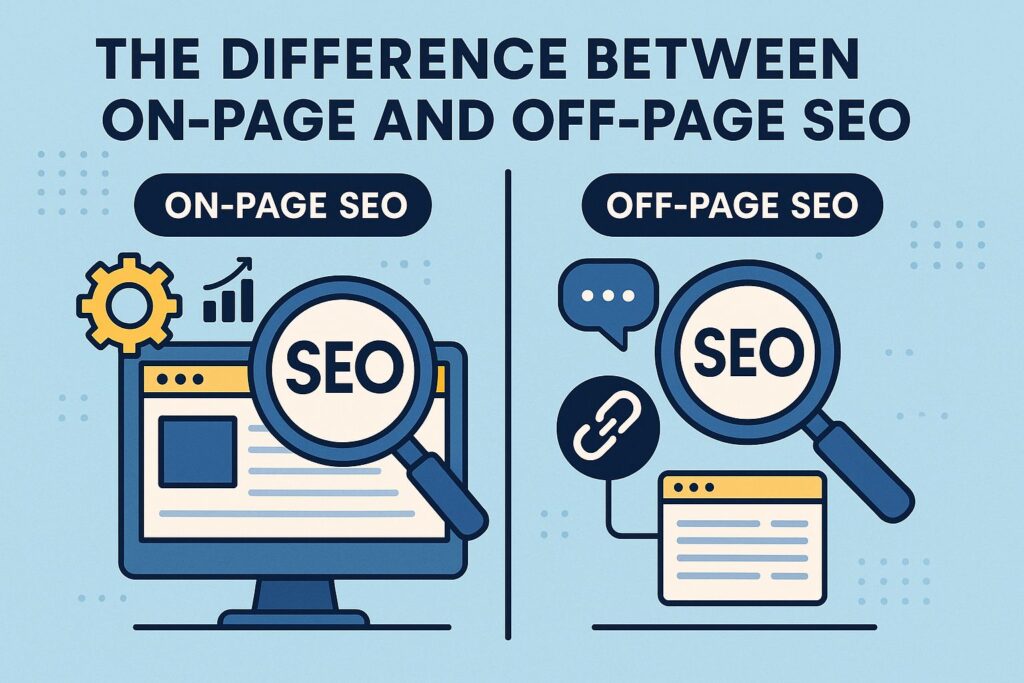
The Difference Between On-Page and Off-Page SEO

Search engine optimization (SEO) is one of the most effective ways to bring organic traffic to a website. But SEO is not only about adding keywords to your content – this is a mixture of many strategies. The most important categories are on-page SEO and off-page SEO. First, these phrases can also look misleading, but when you apprehend them, you’ll realise that they’re facets of the same coin. The on-page search engine marketing focuses on what you can do immediately for your website. At the same time, the off-page search engine marketing covers the activities out of doors your website to promote its reputation and visibility. In this article, we will detect the difference between the on-page SEOs, their benefits, and why you need both for success. What is on-page SEO? The on-web page search engine marketing is the entirety that you may customize on your own website to make it more seek engine and consumer-pleasant. This guarantees that Google absolutely is familiar with your content, shape, and motive. Major factors of on-page SEO: Keywords are the foundations of SEO. The identity Maintaining the proper keywords inside the titles and for your content helps the engines to understand what your page is. Good content is the most important part of the on-page SEO. It should be the original, attractive, and solve problems for the audience. Title and meta details not only explain n the search engine about their page, but also encourage people to click on it. An easy, small, and keyword-rich URL helps users and search engines like Google and Yahoo. For example: www.Instance.Com/seo-tips Connecting one page of your website with another makes it easier to crawl your site for the search engine and improves user experience. A speedy-loading and cell-friendly site is needed, as most internet users browse on smartphones. Using compressed photos with descriptive ALT text makes your website load speedily and is offered. In a quick, on-page search engine marketing makes it clear to understand the content and composition of your website and the SERPs. What is off-page SEO? The off-page search engine optimization is what takes place outside your website, but nevertheless impacts its ranking. It focuses on the creation of belief, authority, and reliability. Think of it as the reputation of your website within the international online community. Major elements of off-page search engine marketing: Backlink from other websites is the strongest sign of trust. If the high-tribunal sites link to your content, Google considers it more reliable. Sharing content on platforms together as Facebook, Twitter, and LinkedIn, allows you to reach a large target market and accrue indirect search engine marketing advantages. Writing posts for other websites not only makes backlinks, but also gives you a place as an expert in your field. When the affected or blogs refer to your brand, it improves your visibility and reliability – even without direct links. If you run a local business, it is necessary to include your name and directions, details, and Google business profile ranking. The off-page SEO is like Word-of-Mouth Marketing. This discovery assures engines that your website is popular and reliable. Difference between on-page and off-page SEO The major difference between on-page and rancid-page search engine optimization is beneath control. The on-page SEO is completely under your control because it is on your own site, materials, keywords, images, and things like optimizing the URL. On the other hand, the off-page SEO depends on external factors such as backlinks, mentions, and reputation, which are influenced by others. Another difference is focus. The on-page SEO optimizes your website and is ready for rank, while the off-page SEO creates authority so that the search engines consider your site worth ranking. Why are both important Some human beings trust that they can handiest rank with the on-page search engine optimization, at the same time as others assume that the off-page search engine optimization, by itself, is enough. The fact is that you want both to prevail. Think of the on-page search engine marketing as a strong residential construction. The off-page search engine optimization is like creating a great reputation in the neighborhood. You need both a strong residence and a good reputation to achieve success. Example of on-page vs off-page search engine optimization Imagine that you write a weblog post on “Top 10 Fitness Tips for Beginners”. Both efforts boosted your article to a high rank and attracted extra people. Tips to balance on-page and rancid-web page SEO Conclusion The difference between on-page and stale-web page search engine marketing is simple: the on-page specializes in customizing your website, while the off-page makes a specialty of the creation of its rights outside your website. Both techniques are essential for long-term fulfillment within the search engine rankings. If you want your website to grow, begin with a sturdy on-page search engine marketing and then create reliability with off-page techniques. By combining each, you’ll see a higher ranking, extra traffic, and strong emblem authority. Read More: How Elon Musk Changed Twitter into X

Uncategorized

How to Make Money on Pinterest Without a Blog

When people think about Pinterest income, the first idea that comes to mind is going for walks visitors on a blog. But here is the fact: you no longer need a blog to earn from Pinterest. With the suitable techniques, you may nevertheless make your appearance, create audiences, and create direct profit streams from the platform. If you are wondering a way to Make Money on Pinterest Without a Blog, this step-by means of-step guide will show you realistic and amateur-oriented ways. Why Pinterest works to earn money Pinterest is not just a social media app – this is a visual search engine where people come to search for ideas and buy products. In fact: This makes Pinterest one of the easiest systems to monetize, even without a blog. Method 1: Affiliate Marketing on Pinterest One of the most popular approaches to make money is through affiliate marketing. This way: When someone clicks on your pin and buys the product, you earn a commission. Pro Tip: Always disclose the link-related link in the details using words like “associated links in this post”. Method 2: Sell Digital Products Pinterest is a goldmine to promote digital products such as: You do not need a blog to host your products – only use platforms like Etsy or Gumroad, and link them directly into your pin. Method 3: Promoting an ETSY shop If you are in crafts, jewelry, or handmade products, Pinterest may be your best marketing tool. Many Etsy vendors rely on Pinterest for continuous sales. Method 4: Offer Pinterest Virtual Assistant Services Do you realize that many bloggers and corporations hire Pinterest managers? If you are a professional in making pins, writing information, or managing forums, you could: This method does not require a blog, a bus skill, or a portfolio. Method 5: Increase and Sell Pinterest accounts Some creators manufacture niche-specific Pinterest accounts (such as DIY crafts or home decorations) and later sell them to brands. Method 6: Drive traffic on YouTube or other platforms If you already have a YouTube channel, Instagram, or TikTok, Pinterest may help you grow faster. Pinterest can be a shortcut to increase its appearance without the need for a blog. Method 7: Cooperate with Brands The brands are always looking for creators to promote their products. Once you develop an engaged Pinterest account, you can give room to sponsorship deals. It works well in niches such as food, fashion, home decoration, and fitness. Tips to be successful without a blog Conclusion Pinterest is no longer a place to save dishes or DIY ideas – this is a serious income source. Even without a blog, you can earn through affiliate marketing, selling products, offering brand deals, or providing services. The key continues, strategy, and understanding what your audience wants. With the correct approach, Pinterest can turn into a full-time business on your side or even a full-time business. Read More: Twitter Marketing for Small Businesses

Uncategorized

Best Pinterest Niches for Bloggers and Creators

Pinterest Blog has become one of the most powerful platforms to drive traffic, manufacture brand visibility, and promote even materials. Unlike other social systems, Pinterest serves as a visible seek engine, which means that people pass through there with the intention of looking, mastering, and taking action. This is why deciding on the right vicinity on Pinterest is one of the most clever selections for bloggers and creators. But right here is the fact: not every niche plays nicely on Pinterest. Some categories get millions of discoveries every month, while others barely receive traction. If you want to develop your blog or business using Pinterest, you need to focus on the niches that already have high demand and long-term capacity. In this article, we will detect the best Pinterest Niches for bloggers and creators, why they work, and how you can use them to your benefit. Why choose the right top cases Pinterest search thrives on the intention. When users type something like “easy healthy food” or “home office idea”, they are looking for immediate inspiration or a solution. If your blog or pin aligns with their discovery, you have won one click. Taking a popular niche means: Best Pinterest Niches for Bloggers and Creators 1. Food and recipes Food will constantly be one of the most powerful niches on Pinterest. Millions of people look for dishes every day, from quick meals to gourmand dishes. Popular sub-leach: In this niche, bloggers can make pins for step-by-step recipes, food prep guides, or food hacks. Attractive food photography works like magic here. .1483 2. Health and fitness Health and welfare materials consistently perform well on Pinterest as people are always looking for ways to improve their lifestyle. Sub-Niches for the goal: Infographics and motivational materials can help you stand out in this niche. 3. Home Decor and DIY Projects Pinterest Home is a Go-Two platform for inspiration. Whether it is designing a comfortable bedroom or making DIY wall art, users like to save ideas later. Sub-niches: This is perfect for niche bloggers who enjoy creativity and design. 4. Beauty and fashion Fashion and beauty material thrives on Pinterest as people constantly seek organization ideas and beauty hacks. Sub-niches: Pins with clear visuals and step-by-step guides do very well here. 5. Travel Travel material has exploded on Pinterest as people plan trips and discover destination inspiration. Sub-niches: High-quality photos with a stand auxiliary guide can make your travel blog stand out. 6. Personal Finance and Side Hustles People like practical suggestions to make and save money. This niche is especially great for bloggers who want to build authority and make money with allied products. Sub-niches: “10 side hustles you can start today” can go viral. 7. Nurture and family life Parents often turn to Pinterest for inspiration and advice to raise children. Sub-niches: This niche is evergreen and has a loyal audience. 8. Blogging and online business Bloggers and manufacturers themselves are very large audiences on Pinterest. Numerous searches for tutorials on construction websites, marketing, and growing online businesses. Sub-niches: If your target audiences are other bloggers, Pinterest is the appropriate platform. 9. Education and learning With the idea of online learning, educational content has gained immense popularity on Pinterest. Sub-niches: This niche is particularly strong for creators selling digital products. 10. Plan of marriage and program Pinterest is the #1 platform for inspiration for marriage. The bride, planner, and even event decorators use it for ideas. Sub-niches: Pins with beautiful designs and mood boards perform very well in this niche. How to succeed in your chosen niche Conclusion Choosing the proper area of interest is step one to growing on Pinterest. Whether you blog approximately meals, travel, fashion, or personal finance, Pinterest is a place for you. The secret is to choose a niche with high demand, create materials that resolve issues, and live in conformity with your pinning strategy. With the right technique, Pinterest can end up your largest visitors and help you grow as a blogger or producer. Read More: How to Use Twitter Threads to Go Viral

Uncategorized

How to Drive Blog Traffic Using Pinterest

Pinterest recipes, DIY crafts, or is more than just one platform for home decor – it is a powerful search engine and traffic driver that bloggers can use to develop their audience. If you want constant, long-term organic traffic on your blog, then Pinterest should definitely be part of your strategy. In this full guide, you will learn step by step how to Drive Blog Traffic Using Pinterest, even if you are starting now. Why the Pinterest Blog is perfect for traffic Unlike social media platforms, where the materials fade quickly, Pinterest pins can run traffic for months or years. Why does it work so well here: Step 1: Set up a business account The first step is to create a Pinterest Business Account. You can either create a new business account or convert your personal account into one. Step 2: Optimize your profile for SEO Pinterest is a search engine, so profile adaptation is important. For example, if your blog is about travel, add keywords like travel blog. Solo Travel Tips | Budget travel in your bio. Step 3: Create a niche-specific board The boards are like categories for your blog. Example: Step 4: Design Eye Catch Pin Pinterest is a visible platform, so your pin will have to draw attention. Example: A blog post titled “10 Tips to Save Money Traveling” can have a pin that says: “Save money on travel: 10 Siddha Hack” Step 5: Write keyword-rich pin details Pinterest also reads lessons, so make sure: Step 6: Link Pin for Blog Post Always connect your pin to the right blog URL. This increases access and gives you more possibilities to attract clicks. Step 7: Stay consistent Consistency on Pinterest is important. The more consistent you are, the more Pinterest will promote your reach. Step 8: Track and Correction Use Pinterest Analytics to check the performance. Additional suggestions for more blog traffic Conclusion Pinterest is an undefied but powerful traffic source for bloggers. By setting up a business account, optimizing your profile, developing forums, designing an appealing PIN, and being consistent, you can significantly increase your blog traffic. Remember: Pinterest is a long-term recreation. But as soon as your strategy clicks, it turns into a reliable source of free, evergreen traffic. Read More: How to Use Twitter Threads to Go Viral

Scroll to Top